
 KRM Sonipat
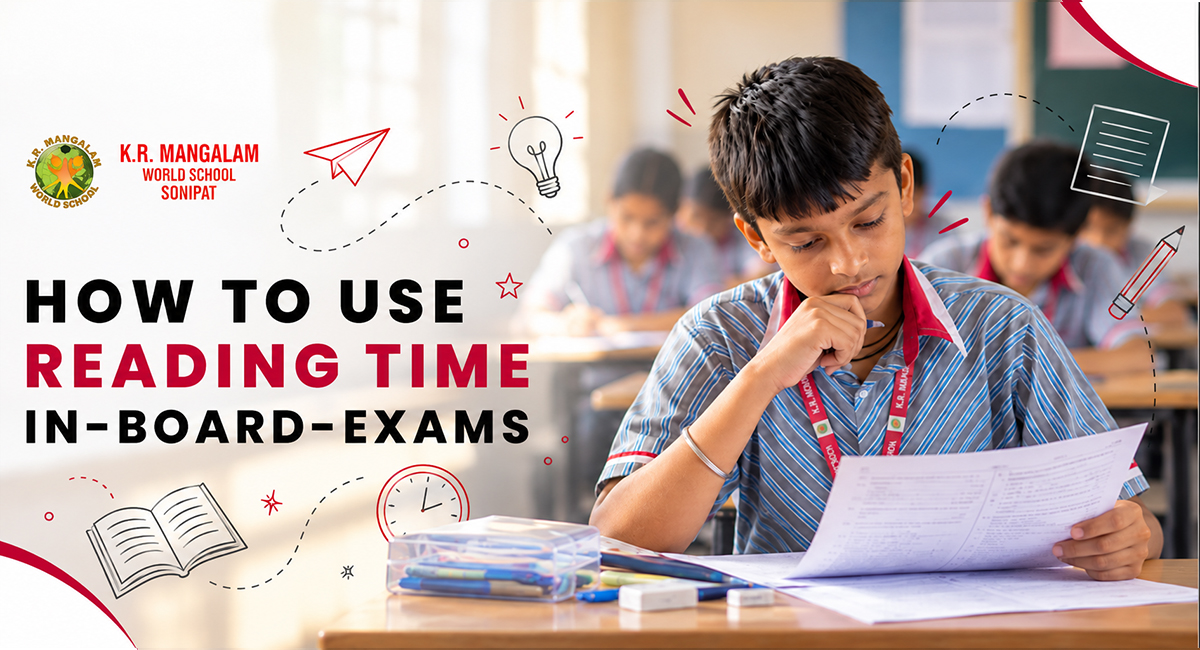
You’ve spent weeks preparing for your board exams. You’ve revised chapters, solved sample papers, gone through important questions and probably heard plenty of advice about how to manage your time. Then comes the day of the exam. You sit down, receive your question paper and have those first few minutes before you can begin writing. For some students, these minutes can feel strange. You know you have prepared, but the nervousness is still there. You may feel like you should immediately start looking for answers or worry about a question that seems unfamiliar.
Take a breath. Those first 15 minutes are there to help you get comfortable with the paper. Reading time isn’t time to panic or rush. It’s your chance to understand the paper, get a sense of what lies ahead and prepare yourself mentally for the exam. Knowing how to use reading time in board exams can make the writing time that follows feel much more manageable.
Why the First 15 Minutes Matter
A board exam is not just about knowing the answers. It’s also about using the time you have wisely. The reading time gives you a chance to see the question paper as a whole before you start writing. You can understand the instructions, notice the different types of questions and get an idea of how you want to approach the paper. It also gives your mind a moment to settle.
Instead of opening the paper and immediately feeling, “What do I write first?”, you can take a few minutes to understand what is in front of you. Think of these minutes as your quiet start to the exam.
Start With the Instructions
Before getting into individual questions, read the instructions carefully. Look at how many questions you need to attempt. Check whether there are choices between questions and pay attention to any special instructions given in the paper.
It may seem simple, but reading instructions properly can prevent avoidable mistakes later. Don’t rely only on what you remember from sample papers or previous exams. Every paper can have its own instructions, so take a moment to read what is actually written in front of you.
How to Read the Question Paper in Exam Time
If you’re wondering how to read question paper in exam time without feeling overwhelmed, keep it simple. Read through the paper calmly. You don’t have to solve every question in your head. Instead, try to understand what each question is asking. As you go through the paper, you may naturally notice questions that feel familiar and others that need a little more thought. That’s completely normal.
Pay attention to the words used in the question. Words such as explain, discuss, compare, analyse, describe, justify and calculate can tell you what the question expects from your answer. For example, if you’re asked to compare two things, simply describing both may not be enough. You need to show the similarities or differences the question is asking for.
Reading the question properly is often the first step towards answering it properly.
Don’t Let One Difficult Question Scare You
Sometimes, the first question you see may not be the one you were hoping for. Don’t let that decide how you feel about the entire paper. There may be several questions later that you’re much more comfortable with. Keep reading and give yourself a chance to see the complete paper before making any judgments.
A difficult question doesn’t automatically mean you haven’t prepared well. It may simply be a question that needs more thought. Staying calm is an important part of any board exam strategy.
Think About How You Want to Begin
Reading time can also help you decide how you want to approach the paper. If your exam allows you to answer questions in a particular order, you can think about where you’d like to begin. Many students feel more comfortable starting with questions they know well because it helps them settle into the exam. You don’t need to spend too much time making this decision. The aim isn’t to create a perfect strategy. It’s simply to have a basic idea of what you’re going to do once writing time begins. This is an important part of understanding how to plan answers in board exam conditions.
Keep the Marks in Mind
The marks given to a question can give you a useful idea of how much time and detail it may need. A short question doesn’t usually need the same amount of writing as a question carrying several marks. During reading time, notice how the marks are spread across the paper. This can help you make better decisions about your time once you start writing. One of the most useful exam time management tips is to avoid spending too much time on one question. You want to give every question its fair share of your attention.
Read Every Question Carefully
Sometimes, students know the topic but don’t answer exactly what the question asks. This can happen when you’re in a hurry. For example, you may know everything about a particular chapter, but the question may ask about one specific part of it. Reading carefully helps you stay focused on what you actually need to answer.
Before you begin writing, make sure you’ve understood the question.It can save you from writing a long answer that doesn’t fully address what was asked.
Don’t Try to Memorise Everything Again
Reading time is not the moment to mentally revise your entire syllabus. You may suddenly remember a formula, definition or fact and feel the urge to go through everything you’ve studied. Try not to. Your preparation has already happened. These few minutes are better used to understand the paper and prepare yourself to answer it. Trust the work you’ve already put in. If something doesn’t come to mind immediately, don’t panic. You may remember it naturally once you start writing and your mind settles into the exam.
What If You Don’t Know an Answer?
You may come across a question where you’re unsure of the answer. That’s okay. Don’t allow one uncertain question to take away your confidence. Make a mental note of it and continue reading. Once you’ve seen the entire paper, you’ll have a better idea of how to use your time and which questions you can approach with confidence.
A good board exam strategy isn’t about expecting everything to go perfectly. It’s about knowing how to stay steady when something unexpected comes up.
Use Reading Time to Build Confidence
The first 15 minutes can actually make you feel more confident if you use them well. You may discover that several questions are from topics you’ve prepared thoroughly. You may recognise familiar concepts or notice that the paper is more manageable than you initially expected. That feeling can change the way you enter the writing period. Instead of starting with panic, you start with a plan. And sometimes, that’s all you need.
A Simple 15-Minute Reading-Time Routine
If you want a simple approach, remember these steps:
First, read the instructions: Make sure you understand what the paper requires.
Next, scan the complete paper: Get a sense of the questions before you start writing.
Then, notice the marks: Use them as a guide when thinking about how much time each question may need.
Identify questions you’re comfortable with: Knowing where your strengths lie can make the paper feel easier to manage.
Pay attention to what each question is asking: Look for key words and understand the exact task.
Finally, take a breath and begin: You don’t need to know exactly how the entire exam will go. You only need to start with the question in front of you.
Good Exam Strategy Begins With a Calm Mind
Board exams are an important part of a student’s academic journey, but they don’t have to be approached with constant fear or pressure. Preparation matters. Practice matters. Time management matters.
So does staying calm. A calm mind gives you the space to think clearly, read carefully and make better decisions. This is something students can practise long before the exam hall too. Taking proper breaks, getting enough sleep, maintaining a healthy routine and giving yourself time to reset can all help you approach your studies with greater focus.
The first 15 minutes of your board exam are a small part of the entire paper, but they can set the tone for everything that follows. So when the question paper reaches your desk, don’t rush. Your preparation has already brought you this far. Let those first few minutes help you put that preparation to work.
FAQs
- What should students do the night before a board exam?
The night before an exam should be about staying calm rather than trying to learn everything at the last minute. Keep your stationery and other essentials ready, review important points if needed and get enough sleep so you can start the next morning feeling fresh. - Can listening to music help students relax before an exam?
It depends on the student. If familiar, calming music helps you relax without distracting you, it may be fine before leaving for the exam. However, avoid anything that makes you more restless or takes your attention away from getting ready. - Should students discuss the syllabus with friends just before an exam?
Not necessarily. Last-minute discussions can sometimes make students more anxious, especially when someone brings up a topic they haven’t revised. If talking to friends helps you feel calm, keep the conversation light rather than turning it into another revision session. - What can students do if they feel tired between two board exams?
Give yourself a proper break after the paper. Eat well, rest and give your mind some time away from studying before returning to the next subject. You don’t need to spend every free minute with your books. - How can students prepare for different types of board exam questions?
Practise a mix of question types rather than solving only questions that you’re already comfortable with. Include short answers, long answers, application-based questions, case-based questions and numerical problems when they are relevant to your subject. - Should students change their study routine during board exams?
It’s usually better to keep a routine that feels familiar and manageable. Major changes to sleep, meals or study hours during the exam period can leave you feeling more tired. A steady routine can make the days between exams easier to handle. - What should students do if they make a mistake while writing an answer?
Don’t panic. Follow the instructions given for corrections in your examination and make the change neatly. One mistake doesn’t mean the entire paper has gone wrong, so correct it and continue with the exam. - How can parents make board exam days easier for their children?
Parents can help by keeping things calm and organised at home. Help with meals, travel, sleep and the practical details of exam days, while giving students enough space to focus. A little encouragement can go a long way, especially during a stressful exam period.