
 KRM Sonipat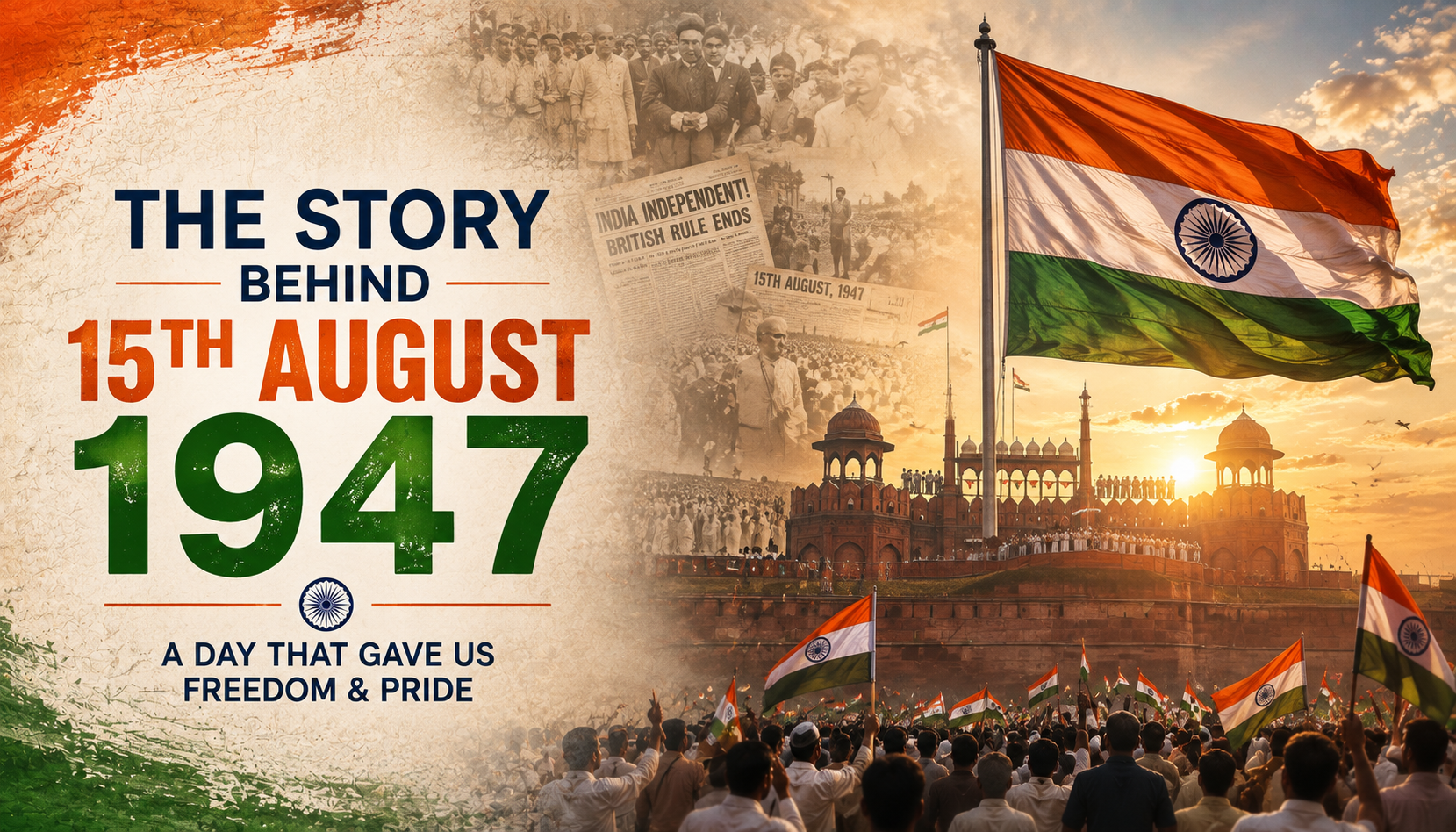
There are dates we remember because they appear in history books, and then there are dates that change the meaning of a nation forever. 15th August 1947 belongs to the second kind.
At midnight that night, India stopped being a British colony after fighting for around two hundred years. But it didn’t happen suddenly, and it definitely wasn’t handed over as a gift. People had spent decades pushing for it, some through protest, some through prison time, some through plain stubborn refusal to give up.
That’s really what Indian Independence Day is about once you look past the flags and the speeches. It marks the end of a very long fight, not the start of an easy one.
How Far Back Does India’s Freedom Struggle Really Go?
You can’t really tell this story starting from 1947. It goes back much further, and it wasn’t the work of just a handful of famous names.
- The first big pushback against British rule came in 1857, though it didn’t succeed
- Things became more organised after 1885, when the Indian National Congress was formed
- Bal Gangadhar Tilak was one of the earlier voices demanding self-rule
- Gandhi later changed the whole approach with mass, non-violent movements like the Salt March and the Quit India Movement
- Nehru, Sardar Patel, Subhas Chandra Bose, Bhagat Singh, Sarojini Naidu, and many others pushed for freedom in their own, often very different, ways
- Ordinary people carried a big part of this too, students walked out of classrooms, workers went on strike, farmers refused unfair taxes, and women joined protests and underground networks that most textbooks never name
A lot of these people were arrested or beaten along the way, and many of them are simply forgotten now.
Why Was 15 August Picked as the Day India Became Free?
This part surprises a lot of people when they hear it for the first time.
Britain’s original plan was to leave by June 1948. Lord Mountbatten, the last Viceroy sent to oversee the handover, pushed the date up on his own. Officially, he wanted to avoid a long, drawn-out transition. But by his own account, he also picked 15 August because it was the anniversary of Japan’s surrender in World War II, a moment he’d personally overseen as a military commander in the region.
So the reason behind why India got independence on 15 August wasn’t tied to India Independence Day history at all. It came down to one British officer’s memory of a different war, in a different part of the world.
The legal groundwork was laid earlier that July, when the British Parliament passed the Indian Independence Act, setting up two new countries: India and Pakistan.
On the night of 14 August, the Constituent Assembly gathered in Delhi. Just past midnight, Nehru gave his now-famous “Tryst with Destiny” speech. And with that, India was officially free.
Was Independence Only a Moment of Celebration?
Photos from that time show cheering crowds and flags everywhere, and that part is true. But it’s only half the picture.
- Independence arrived at the same time as Partition, which split British India into India and Pakistan almost overnight.
- Millions of people woke up on the wrong side of a border they never agreed to.
- Families who had lived as neighbours for generations were suddenly separated, and in many cases, forced to flee.
The violence that followed was brutal. Nobody agrees on the exact numbers, but most estimates put the deaths in the hundreds of thousands, with many more millions displaced from their homes.
This is part of why Independence Day significance means different things to different people. For a lot of families, 15 August meant freedom and pride. For others, it’s tied to loss they never fully talk about.
Why Is 15 August Important for Us?
Every year, Indian Independence Day comes with the same routine: flag hoisting at schools and offices, patriotic songs on loop, and the Prime Minister’s address from the Red Fort.
None of that is wrong, but the deeper point often gets lost. The people who won this freedom didn’t agree on much. They disagreed about tactics, about politics, about what kind of country India should even become. The one thing they shared was the belief that Indians should be the ones deciding their own future, not someone sitting in London.
That’s what makes 15 August more than a one-time event from 1947. It’s also a reminder that freedom isn’t something you get once and keep forever without effort. It has to be looked after.
What Does This Day Mean From Where We Stand Now?
Almost eight decades on, India looks nothing like it did on that first Independence Day. Cities have grown, technology has changed how people live, and the economy looks completely different.
But every 15 August, the country still pauses and goes back to that midnight moment in 1947, not to stay stuck there, but because it’s worth remembering that none of it was guaranteed. People fought for it, argued over it, and paid a real price for it, long before anyone got to actually live in a free country.
That’s probably the real Independence Day significance. This 15th August, let’s celebrate with K.R. Mangalam World School, where students don’t just hear the story of independence, they learn what it really took to earn it. Join us in honouring the day that shaped our nation.